Rethinking Education with Ishika Bihani: From Pressure to Purpose
The education system is at the heart of every society, shaping not only careers but also values, confidence, and life choices. Yet, the most pressing question remains: what is the true purpose of education?
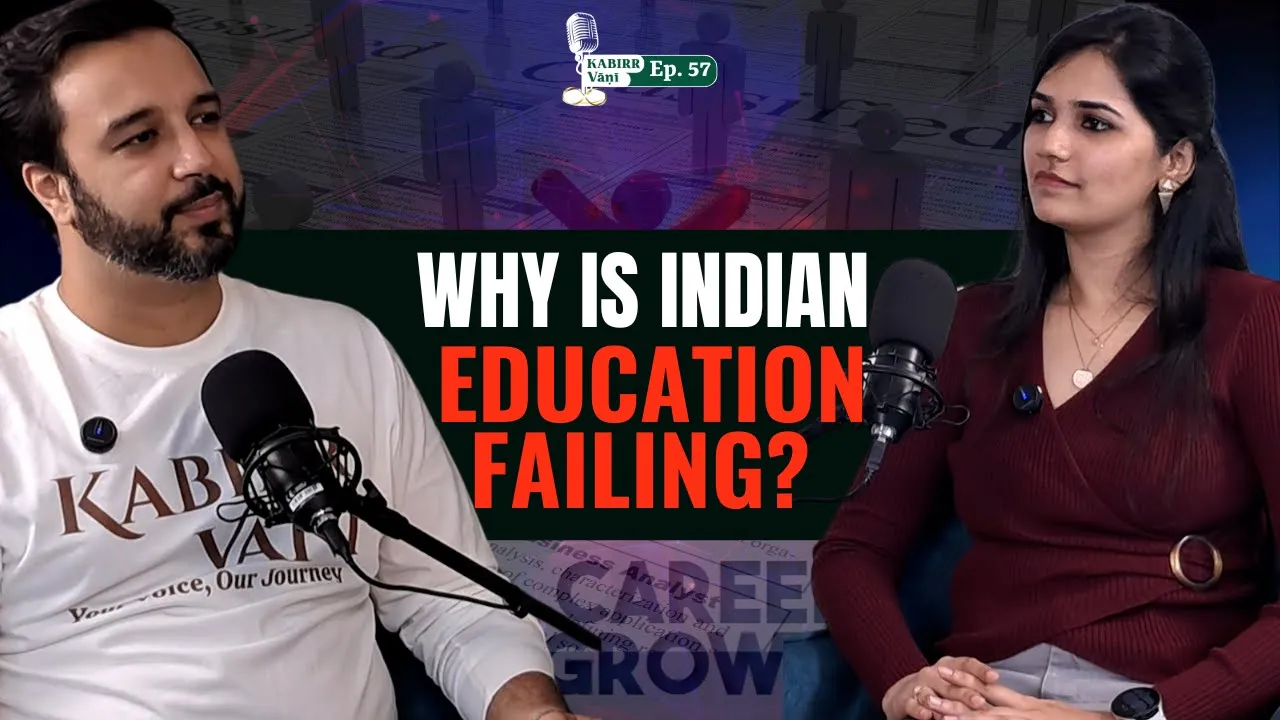
On the Kabir Vani Podcast, Ishika Bihani a chartered accountant, behavioral science scholar, and founder of an edtech startup, shared why our education model needs urgent transformation. From bridging the skill gap to addressing mental health, parenting, employability, and spirituality, her perspective offers hope for a future where learning is practical, joyful, and life-enriching.
The Purpose of Education
When asked why they study, most students answer: “for a job” or “to start a career.” But Ishika insists that education must go beyond survival.
“The true purpose of education is to create a society free from stereotypes, prejudices, and rigid notions. Knowledge should make us rise above divisions of caste, gender, and religion.” – Ishika Bihani
If education only measures memory and marks, it misses its real goal: building character, ethics, and creativity.
Unemployment vs Unemployability
One of the most pressing issues is not unemployment but unemployability. While lakhs of students graduate each year, industries still struggle to find job-ready candidates.
Why? Because the skills taught in colleges don’t match the skills needed by industries. Outdated syllabi, rote learning, and lack of application leave students unprepared for real-world challenges.
With AI, blockchain, and fintech changing the world, Ishika argues that students need hands-on projects, case studies, and practical exposure, not just degrees.
The Pressure to Perform and Its Consequences
Perhaps the darkest side of the system is the pressure of failure. Ishika points out that rising student suicides — some as young as 14 or 15 — reflect how destructive the system can be.
“If a child studies only under pressure, they will never evolve. They need an environment that nurtures curiosity, not fear.” – Ishika Bihani
Cut-offs at 98–99%, endless comparisons, and fear of exams push students into anxiety. Parents often fail to recognize children’s unique talents, reinforcing the belief that only grades define success.
Parenting in the Age of Gen Z
Education reform cannot happen without parenting reform. Ishika explains that parents must provide what the system often lacks: emotional availability.
Instead of scolding or comparing siblings, parents should:
- Spend time understanding where a child struggles.
- Encourage application-based learning (like experiments at home or small projects).
- Set healthy boundaries while allowing questioning.
Gen Z students crave boundaries, but they also demand reasons and conversations. Unlike past generations where obedience was unquestioned, today’s children want to understand the “why” behind rules.
This, Ishika believes, is not defiance, it’s the seed of innovation and system change.
Passion vs Profession, Can You Have Both?
A recurring struggle for students and young professionals is choosing between passion and practicality.
Ishika frames it simply: follow your passion, but ensure it can sustain you. Passion without planning soon turns into frustration.
She suggests treating passion as a side hustle until it matures into a full-time career. In her words:
“Balance passion with responsibility. Pay your bills while you build your dream.”
Self-Learning vs College Learning
Having cleared ACCA in her first attempt, Ishika knows the discipline required for self-learning. But she acknowledges that colleges add value through peer learning, competition, and memories.
Her own edtech startup limits class sizes to 40 students per teacher, ensuring personal attention. She believes small, interactive groups foster confidence, collaboration, and healthy competition.
The Role of Teachers and Mentors
Ishika highlights how one teacher can transform a student’s life. A supportive teacher not only corrects grammar or math but also instills confidence, curiosity, and resilience.
She urges parents and institutions to focus on mentorship over punishment. Children thrive when they feel supported rather than judged.
Discipline vs Freedom
Discipline is necessary, but strictness alone can backfire. The key is blending:
- Boundaries to guide children.
- Openness to let them explore.
- Emotional support to help them through failure.
When children fail, the response should not be “You’re a failure,” but “You need to improve here.” Words matter. Encouragement can save lives.
Technology, Dopamine, and Distraction
From Cocomelon for toddlers to endless doom-scrolling for teens, digital content is rewiring attention spans. Ishika argues that banning technology is impossible, instead, we must use it wisely.
For younger children: colorful storytelling, interactive books, and dramatized learning can replace addictive screens.
For older students: short-term goals, feedback, and gamified lessons can keep motivation alive without overloading pressure.
Mindset, Manifestation, and Spirituality
Beyond academics, Ishika embraces mindset, manifestation, and spirituality as pillars of growth. She journals dreams, writes goals, and visualizes achievements, a practice she calls her form of manifestation.
“Balance comes from mindset, manifestation, and spirituality. They help you stay calm during challenges and grounded during success.” – Ishika Bihani
For her, spirituality is not separate from religion. It is about peace, whether through music, journaling, prayer, or meditation.
Final Words: Advice to Gen Z and Parents
For Gen Z students:
- Follow your heart, but give time for growth.
- Don’t let failure define you, it is only feedback.
- Be fearless, question systems, and innovate.
For parents:
- Chill a little more.
- Be emotionally available.
- Remember, your child needs support, not comparison.
Education, Ishika insists, should move from pressure to purpose, from marks to meaning, from rote to real life.
You can listen to the full conversation with Ishika Bihani on the Kabir Vani Podcast, available on Spotify, Apple Podcasts, and Amazon Prime Music.