
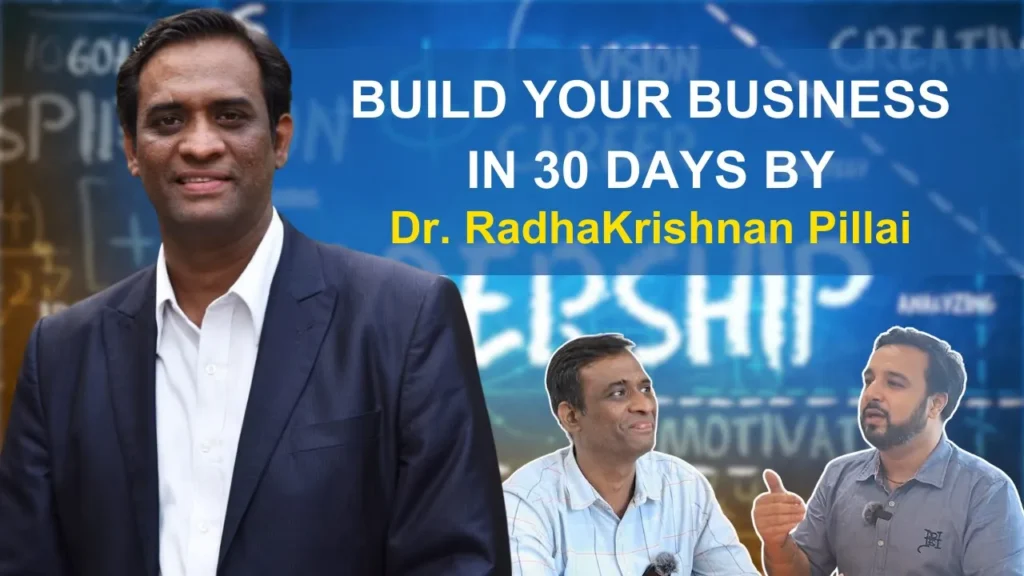
Entrepreneurship is not merely about starting a business. It is about vision, energy, passion, and commitment. In an insightful conversation on the Kabir Vani Podcast, Dr. Radhakrishnan Pillai—celebrated author of Chanakya’s 100 Sutras and many bestselling books—decoded the real essence of becoming an entrepreneur in India today.
Entrepreneurship as a Long-Term Journey
Many people believe startups are short experiments lasting a couple of years. Dr. Pillai explains that true entrepreneurship requires at least 20–30 years of commitment. The initial struggle is about survival and earning, followed by the challenge of scaling and sustaining growth. Without long-term vision, most startups fail within months.
The True Spirit of an Entrepreneur
The word entrepreneur is derived from enterprise—someone with enthusiasm (utsah), energy, and inspiration. Entrepreneurship is not restricted to running companies. A musician can be an entrepreneur in music, a sportsperson in sports, a filmmaker in cinema. It is about the mindset to organize, scale, and lead, rather than the idea alone.
The Role of Mentorship
While it is possible to succeed without a mentor, Dr. Pillai emphasizes that the journey becomes significantly longer. A guru, coach, or guide saves years of trial and error. Mentorship may come directly or indirectly—through teachers, books, podcasts, or role models. To succeed faster, entrepreneurs must seek guidance from those who have already walked the path.
Self-Validation Before Market Validation
Before the market validates an idea, the entrepreneur must first believe in it. Passion and conviction are the earliest forms of validation. External validation in the form of sales, investments, or recognition follows only after consistent commitment. Dr. Pillai’s own career in Chanakya studies began without validation but eventually grew into a global movement.
Investment Insights
Dr. Pillai advises: “Don’t wait for investors to start. Start first—investors will follow.” Bootstrapping and building early cash flows create stronger foundations than chasing investors too soon. Many entrepreneurs who began modestly with lakhs eventually attracted crores once their products proved their value.
Balancing Success and Failure
Failure builds resilience and humility, while success, if mishandled, can inflate ego and bring downfall. According to Dr. Pillai, the ego from success is far more dangerous than the sadness from failure. The foundation of an entrepreneur must therefore be spiritual, grounded, and humble.
The Second-Generation Challenge
In India, second-generation entrepreneurs often face tension between traditional methods of their parents and modern approaches driven by technology. Success comes when a common vision aligns these differences. For example, a transport business expanded from ₹100 crores to ₹2000 crores when father and sons combined legacy strengths with digital tools.
Leadership Lessons from Chanakya
Entrepreneurs are also leaders. Drawing from Chanakya’s philosophy, Dr. Pillai emphasizes that a leader must be a Rajarshi—a king with the wisdom of a sage. Leaders should inspire through vision, not fear; empower teams by listening, not commanding; and create a culture where people feel motivated to stay, not compelled. As he notes, “People don’t leave companies—they leave bosses.”
Should Corporate Employees Turn Entrepreneurs?
For professionals considering entrepreneurship, Dr. Pillai advises careful risk–reward analysis. Family financial planning is critical, and starting earlier in life makes the transition smoother. Entrepreneurship is not a shortcut to free time; it is a 24/7 lifestyle that demands commitment and resilience.
Inspiration Over Motivation
Motivation is external and temporary, while inspiration is internal and lasting. Entrepreneurship is a journey of no return. Once committed, rewards like money, recognition, and impact follow only with humility, vision, and persistence. As Dr. Pillai says, “The ego that comes from success is more dangerous than the sadness that comes from failure.”
Closing Note
Entrepreneurship is less about quick wins and more about long-term growth and inner stability. With the right vision, mentorship, and humility, entrepreneurs can create businesses that not only succeed but also inspire.
Listen to the Full Podcast
You can catch the full conversation with Dr. Radhakrishnan Pillai on the Kabir Vani Podcast, available on Spotify, Apple Podcasts, and Amazon Prime Music.